
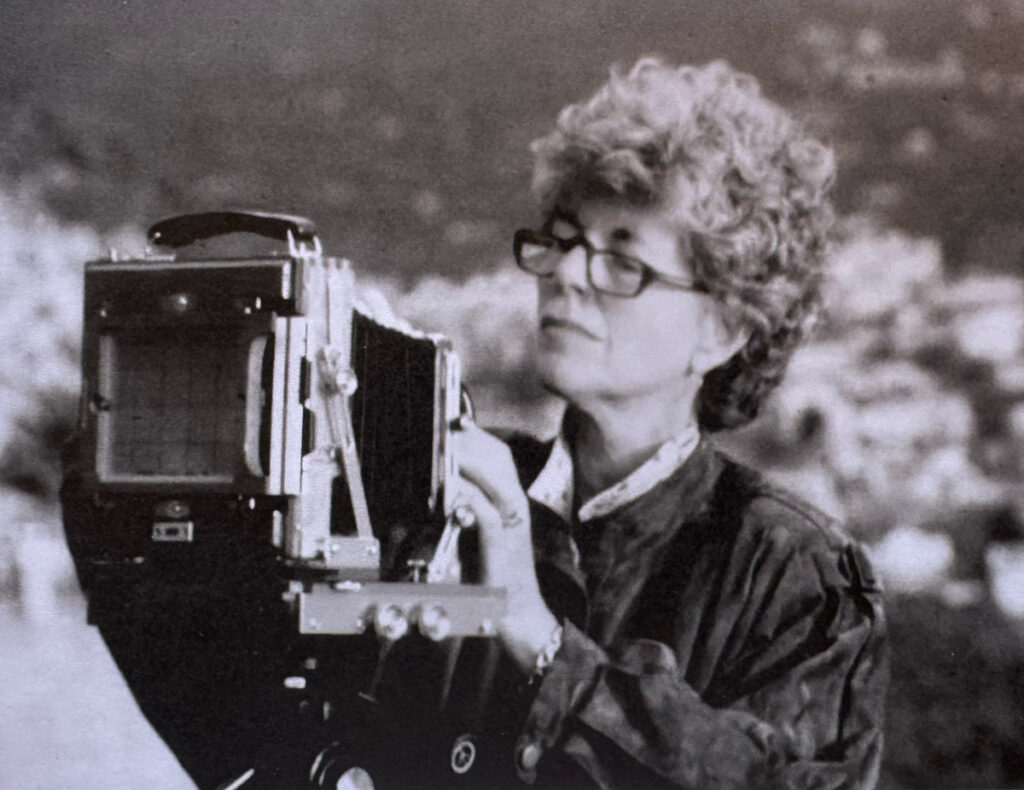
 Clare Brett Smith (April 11, 1928–April 11, 2025) has spent most of her life in New England. She graduated during the early years of the progressive Putney School and then from Smith College where she majored in History.
Smith has been active in international economic development for many years. After fifteen years as a commercial importer of crafts, she then served as President of Aid to Artisans for twenty-two years until her recent retirement. After initial visits to countries in Asia, Africa, Central and South America, and Eastern Europe, she initiated a practical and flexible plan of action. She returned to the towns and villages on a regular basis to provide long-term support and subtle guidance to the artisans in dozens of communities. She always worked within the existing social structures, never imposing herself (or Western imperatives) upon any country’s heritage or artistic expression. Because her motives were sincere and her bonds of friendship with individuals well established, Smith’s much admired modus operandi became effective foreign policy of a high order.
Clare Brett Smith continues to be showered with awards for her creativity, leadership and ability to get things done. She is the recognized model on how to respectfully approach and help others whose cultures are different from our own. From the onset of her work, long before micro-grants became popular, Clare sought out women and helped them obtain the educational and business skills to establish their own companies. These women could not only sustain their own families but contribute to the betterment of their communities and countries. It was through Clare’s confidence in them that they earned not only much needed income but even more crucial financial independence, self-confidence and pride in their own success.
Clare continues to be a prominent guest of universities, women’s organizations and non-profits around the world, speaking and advising others in hands-on economic development. Her many awards include those of governments, universities and the commercial sector. Smith’s lifelong interest in photography was instrumental in relating very personally to the people whom she has assisted over the years. And her photographs helped raise the funds and recognition needed to continue helping these artisans.
Clare’s photographs are also the stuff of her own personal expression. This more personal segment of her work has been widely exhibited and published. She has had solo exhibitions from New England to California and from Italy to Japan. Her books are testaments to her artistic sense and affinity for the visual arts.
From the intro to THERE ARE NO WORDS:
The visual arts should not depend upon any sort of explanation, though curators, gallery directors, editors, and even the artists themselves, all seem to want to tell the viewers about the image or to explain what a picture, a group of pictures or installation means. Whether in a conversation, a formal lecture, during panel discussions, or in print, such is surely meant to bring, in a manner of speaking, the viewer into the picture.
Any efforts to explain pictures, however, actually discourage a viewer’s careful, thus limiting any potential visual experience. This seems especially so in books, traditionally, a medium more verbal than visual. What might be the intention of such information? Is it to arrive at a consensus as what a particular piece is about? Is it to persuade the viewer to think of visual images more intellectually and thereby less intuitively? Or is it to gain some universality of response, which is not only impossible, but undesirable? At the point which the artistic work is exposed to public scrutiny, the artist is best left out of the picture. It is not the artist’s place not her responsibility place to expose or proclaim what she thinks or feels about his own work; even and especially when asked! For the artist to burden her audience with any such information is to rob them of their own discoveries and to experience their own ideas and feelings. The work must be given an opportunity to silently speak for itself. It is the work that must provoke the audience to examine it. Or not. The best guidance is, perhaps, that the viewers must both discover their questions and, provide themselves the answers. In so many instances, the answer is – that there is no answer. In photography, technical data are routinely demanded, as if such things were key to the artist’s vision, or as if requisite for seriously examining the picture.
There is a leap that we must take, away from the verbal, to have a purely visual experience. We need opportunity, a focused mind, self-reliance and mental (if not actual) solitude. Silence is required. It is only in a state of quietness that we are given the luxury of our own thoughts.
It will become apparent looking at this book, that there are no words by which we might escape paying attention to its pictures. Clare Brett Smith’s instincts are strong and precise. Her understanding is broad-based and penetrating. She presents us here with the rare chance to block verbal inquiries and extraneous distractions. She consistently gives us the opportunity to engage visually with pictures.
In all her previous books, the photographs she makes and the words she puts together with them, have functioned as a team to serve a most useful purpose: universal truths eloquently bound with strands of her observations and experience. In this book however, the words are stripped away and we are left with the freshness and visual sensitivity to the world around her for which THERE ARE NO WORDS.
Rarest of all her strengths, Clare Smith is never without grace and a spirit of sincere humility toward the situations, people and things that she chooses to photograph. Quite suddenly we find ourselves in a kind of magnetic field. It is wonderfully undirected yet held fast in a visually mesmerizing experience. Her pictures quietly put forth a strong clear statement without losing her sense of wonder. Smith’s photographs give us exactly what we need: wordless answers to the questions we have yet to ask, because, upon reflection, we discover that they were unnecessary in the first place.
Such is the character of the work of Clare Brett Smith.
—Susan Barron, Author of There Are No Words